The name plates wall
In the sculpture garden, a stone wall carries hand-painted plaques: a name and a date of birth, sent by Korean adoptees from all over the world. New plaques are added several times a year.
Find a name on the wall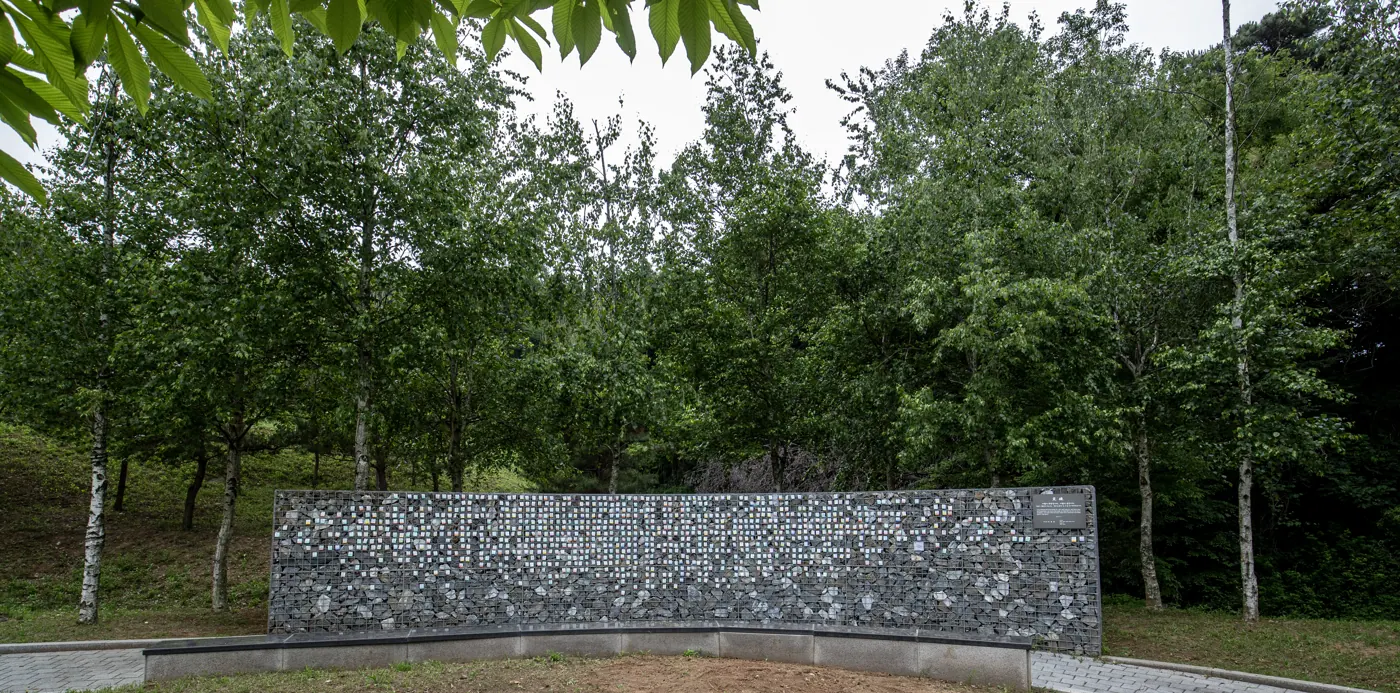
Omma Poom means a mother's arms. The park gathers several places of memory, a few minutes' walk from one another.
This page is not translated into your language yet: it is shown in English.
In the sculpture garden, a stone wall carries hand-painted plaques: a name and a date of birth, sent by Korean adoptees from all over the world. New plaques are added several times a year.
Find a name on the wall Inside the park's Peace Museum, panels carry the words of adoptees themselves, laid out and translated. Since the last installation the panels hang in frames, so they can be moved and renewed.
About Adoptee Voices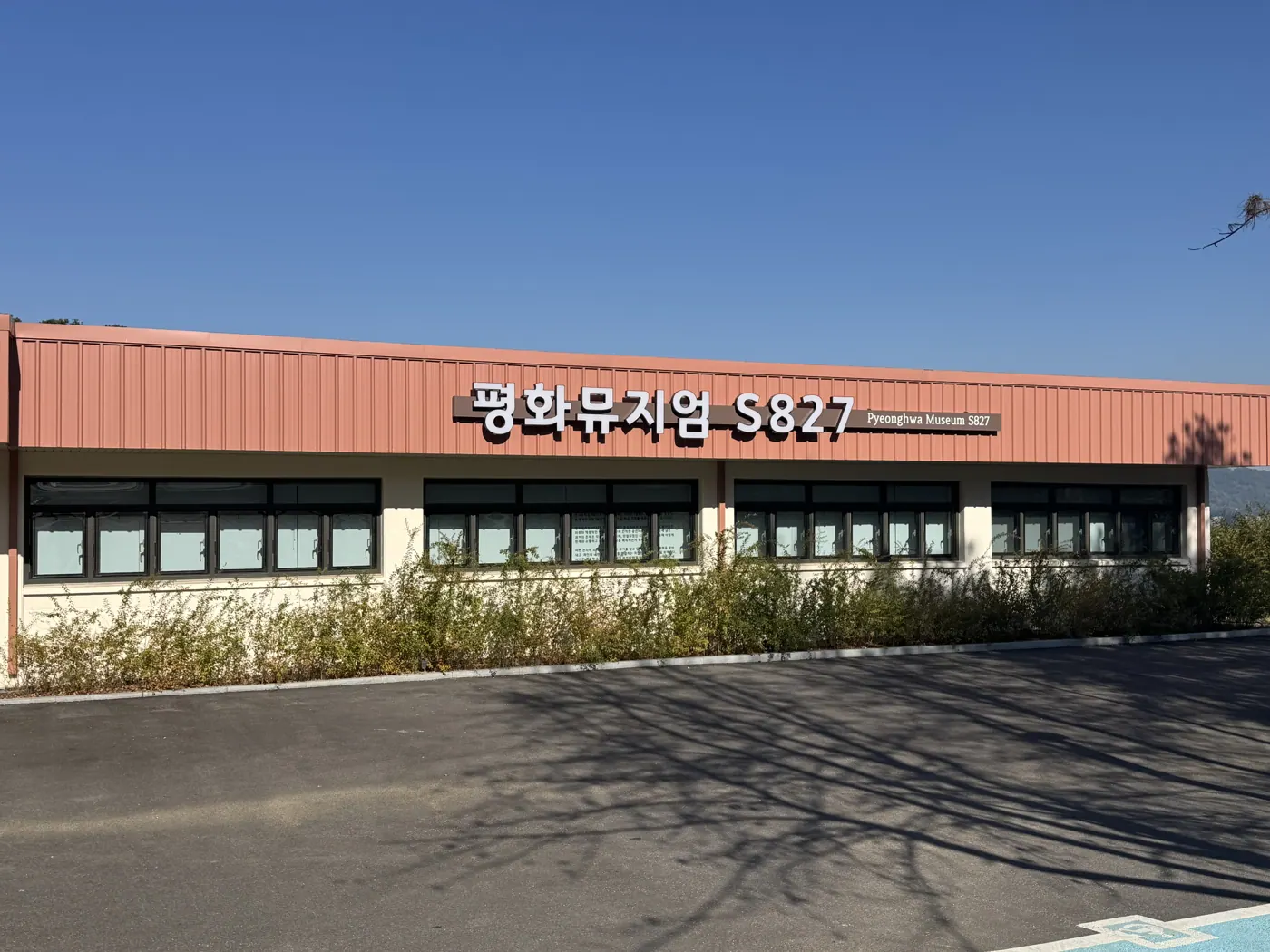
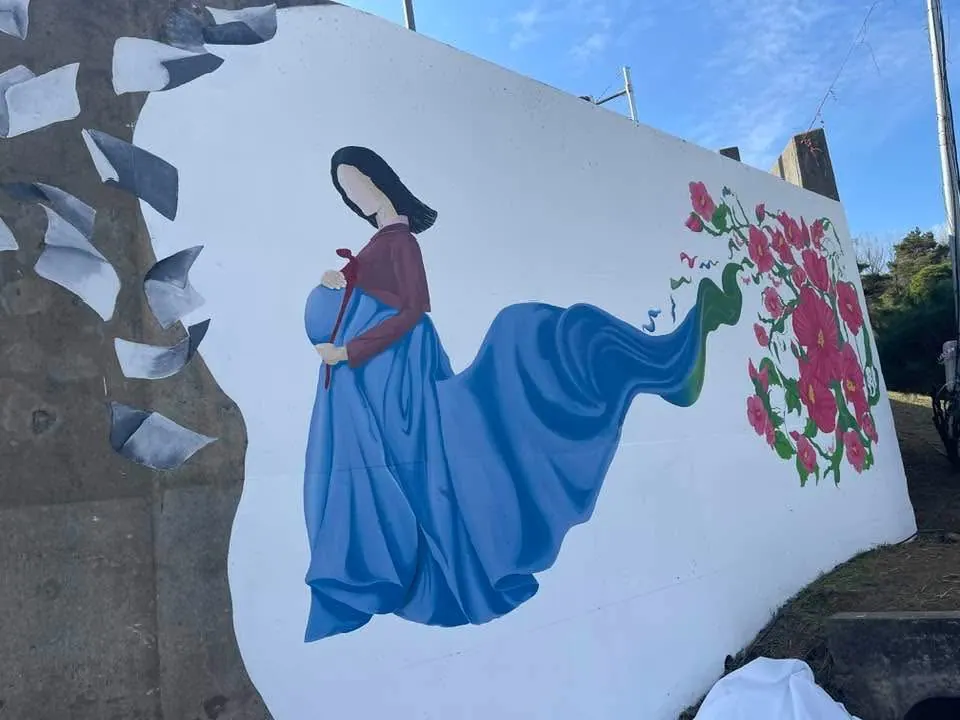
“bLOSSom, a Flower Blooming from Loss” was painted in 2024 by the Korean adoptee Leah Forester, with the contribution of Karen Woodburn. A pregnant mother cradles her unborn child; her dress carries culture, family and language, and its torn pieces stand for the rupture between mother and child. As adoptees travel back towards their origins, mugunghwa flowers emerge. The mural stands on the other side of the hill from the Peace Museum; the City of Paju is planning a winding path to link them more directly.
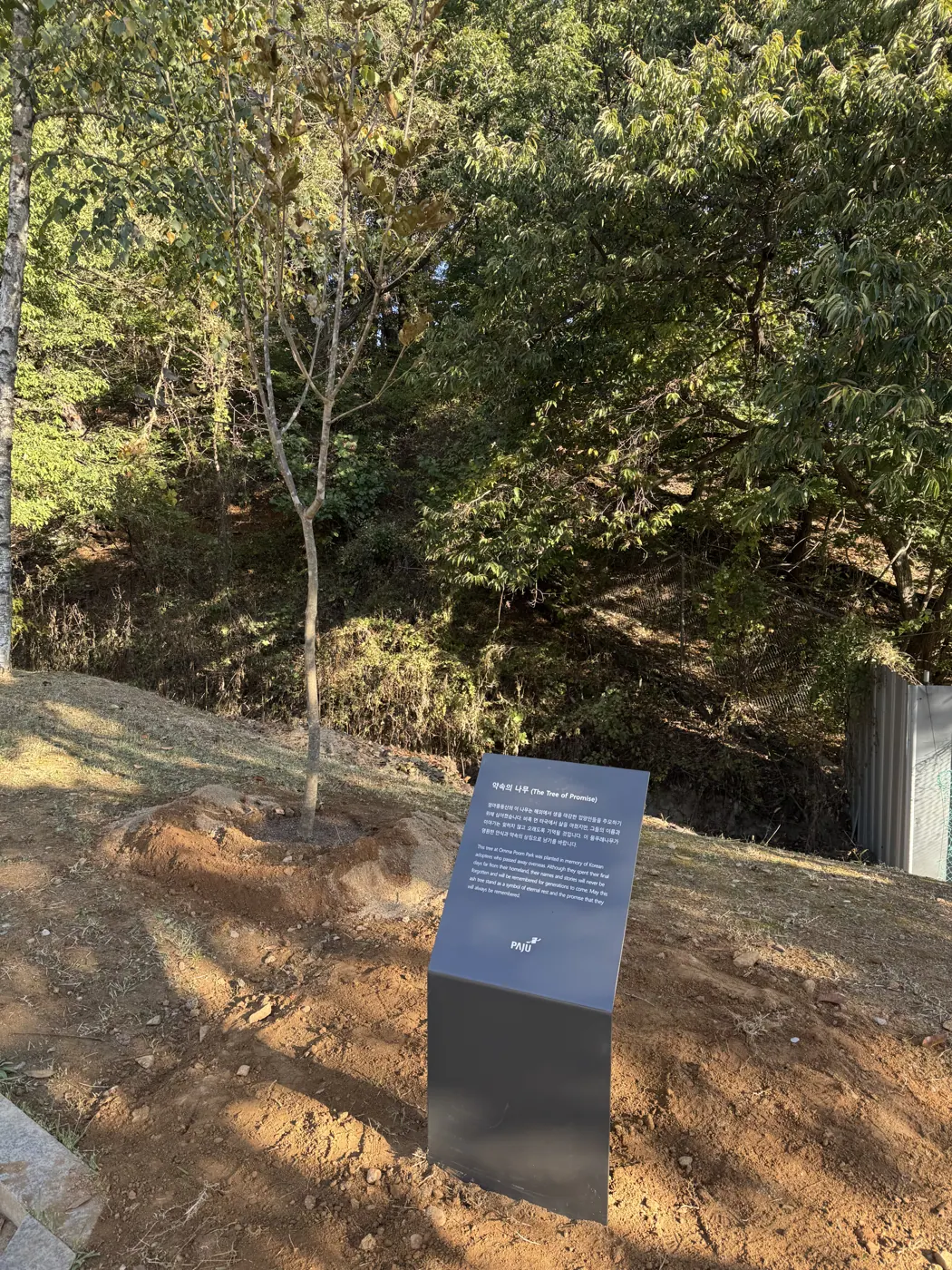
The Tree of Promise (약속의 나무) is an ash tree planted in memory of the Korean adoptees who passed away overseas. They spent their last days far from their homeland; the tree stands for the promise that their names and their stories will be remembered. It was given by Me & Korea.
Ojakyo (오작교) is the bridge of the Korean legend on which two separated lovers meet once a year. In the park, it is the name of the space devoted to the search for birth families.
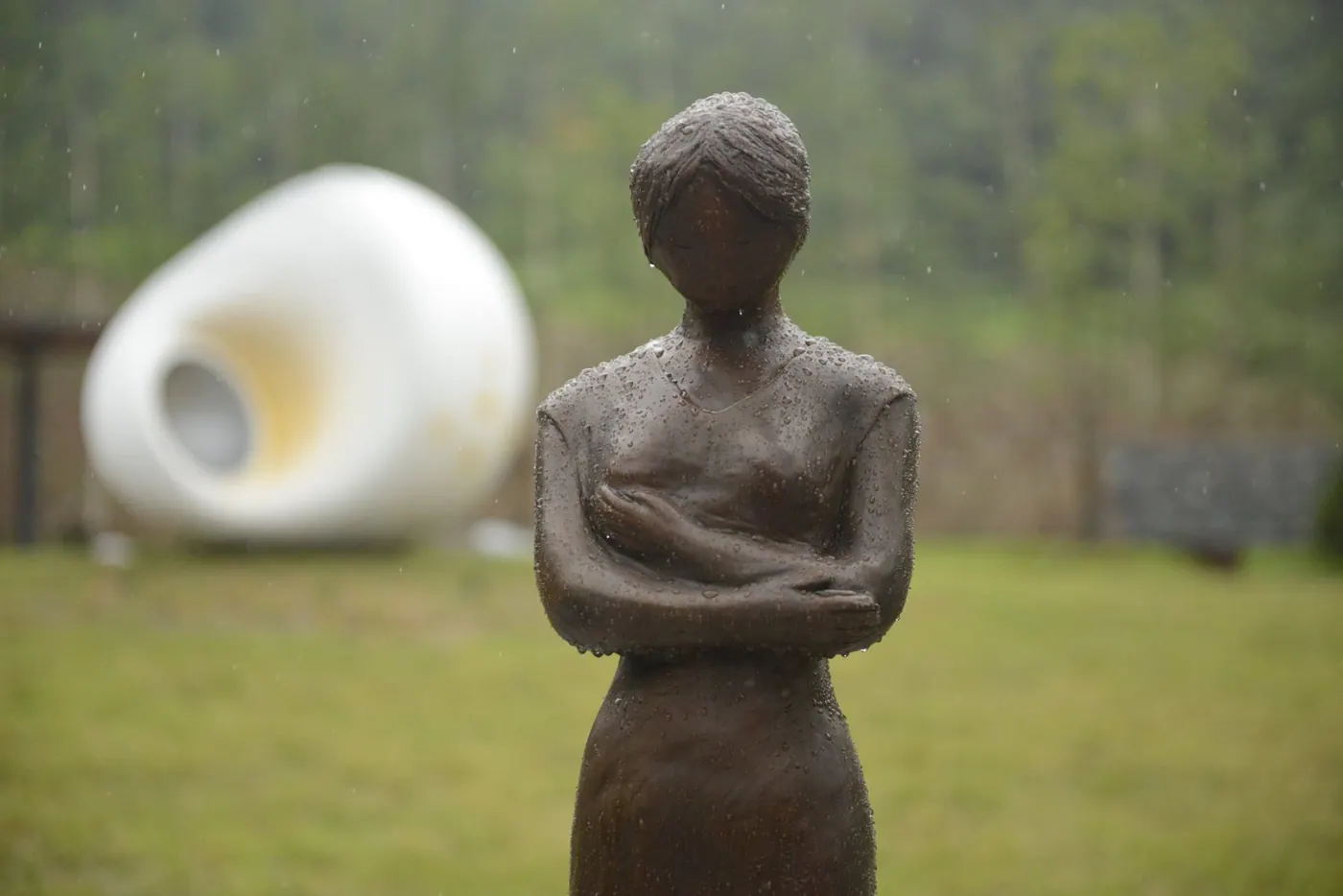
Searching for familyIn the sculpture garden, a large white ring-shaped sculpture and a bronze figure of a mother, arms folded over her chest, stand in front of the name plates wall.
Still to comeThe names of the artists and the titles of the works, to be confirmed with the City of Paju.